p.2

This is the will of Pieter Jeronimus van Kessel, who is the father in law of Jannetge Hendricks Verhaer.
I'm interested to know what the terms are for her in this will, as the widow of Jeronimus Pietersz van Kessel.
It starts on the right hand side of the page- then goes overleaf- which I will upload as p.2.
Many thanks for any help with this deed.
best wishes
Anne
p.2
It is not really a will. The preceding and following pages also cover this inheritage.
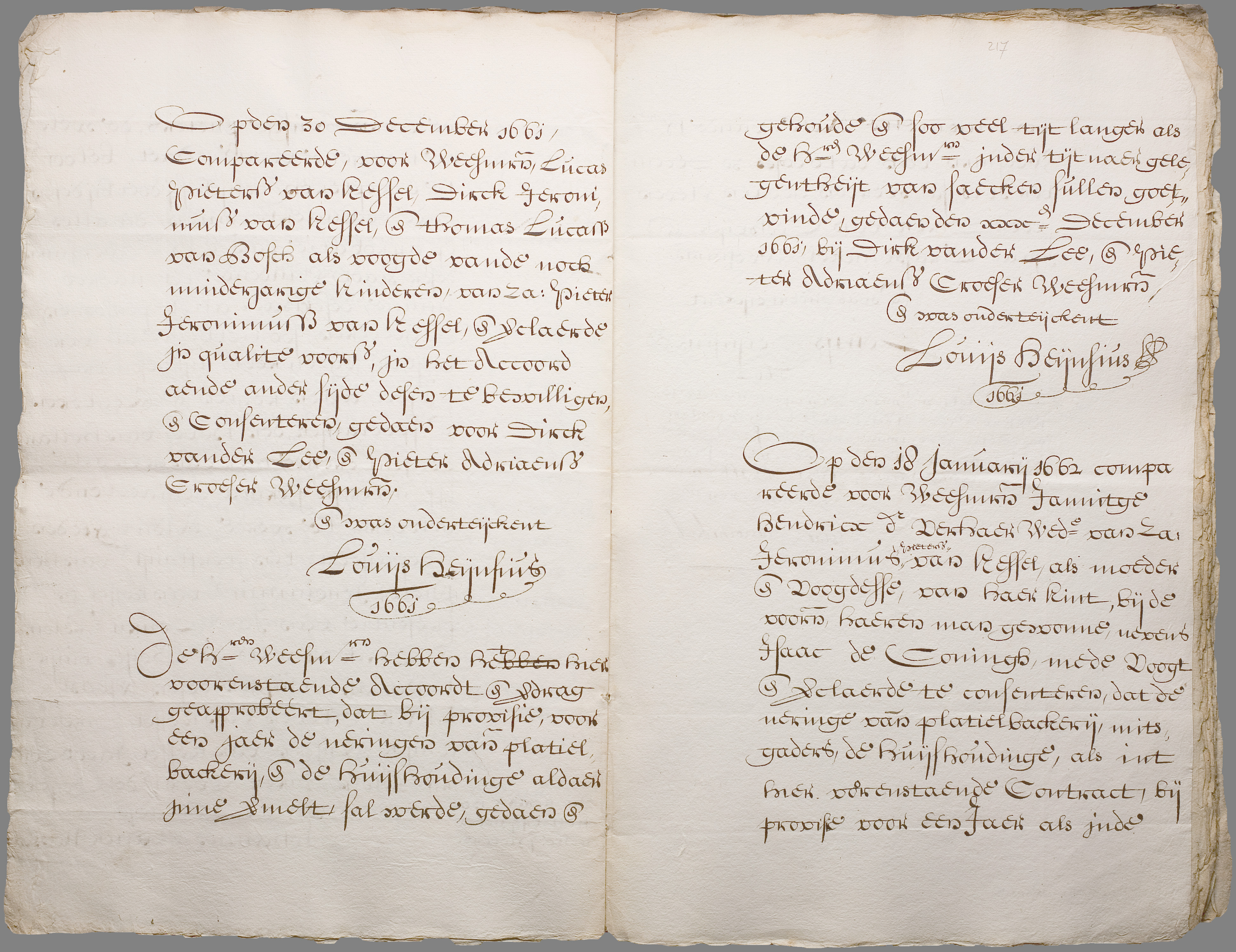
Op den 18 januarij 1662 compa-
reerde voor weesmeesters Jannitge
Hendricxdr Verhaer weduwe van zaliger
Jeronimus Pietersz van Kessel, als moeder
en voogdesse van haer kint, bij de
voornoemde haeren man gewonne, nevens
Isaac de Coningh, mede voogt
en verclaerde te consenteren dat de
neringe van plateelbackerij, mits-
gaders de huijshoudinge, als in t
hier vorenstaende contract, bij
provise voor een jaer als in de
//
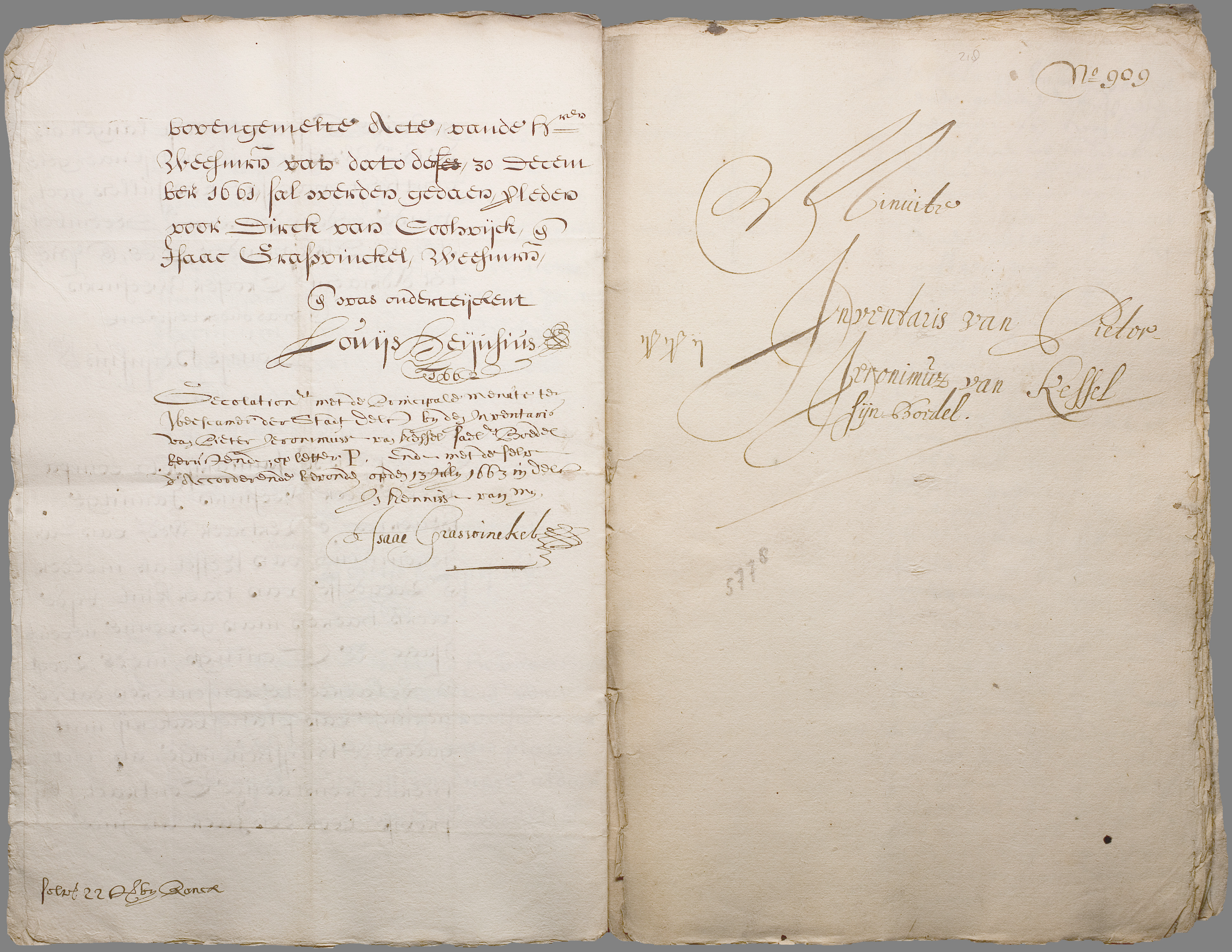
bovengemelte acte van de heren
weesmeesters van dato den 30 decem-
ber 1661 sal werden gedaen verleden
voor Dirck van Coolswijck ende
Isaac Graswinckel, weesmeesters
ende was onderteijckent
Louijs Heijnsius
1662
Gecolationeert met de principale menute ter
weescamer welcke bij de inventaris
van Pieter Jeronimusse van Kessel saeliger boedel
berustende op letter P. Ende met deselve
d accorderende bevonden op den 13 julij 1663 in Delft
In kennisse van mij
Isaac Grasswinckel
Thanks for this Gerry.
I wasn't quite sure what this 'deed' represented for Pieter Jeronimuss van Kessel, although the following pages of the Inventory (there are many!) include Jannetge as a 'debtor'. However the scribes writing that follows in the inventory is very difficult to read (not like this very clear hand above) so I haven't been able to locate the page which shows Jannetge as a debtor.
This part is interesting as when Jannetge's husband Jeronimus died in 1660 the pottery he had bought in 1655 was already in debt. So the fact that she agreed with the Orphan chamber masters to 'proceed on a one year basis' suggests they were hoping she could manage the business out of debt-perhaps?
All very interesting :-)
very best wishes
Anne
Can you give the link to the invebtory in the Delft archive?
Hi Gerry
Hopefully this link, below will work.
It's dated the following day- 9 Nov 1661-
https://zoeken.stadsarchiefdelft.nl/detail.php?nav_id=0-2&id=16643640&i…
Let me know if there's a problem and I can try another link.
Many thanks.
Anne.
p.s. Hendrick Verhaer is also listed as a 'debtor'- I'm not sure if that's Jannetge's father.
This might also help Gerry
55 Johannes Ranck, admitted April 20, 1652
Collection description:
2112-2127 Minutes of various deeds, 1652-1684. 15 bundles; 1 volume
DeedType of deed
Notarial
Source
Notarial deed
Inventory number
161.2117
Folio
218
Date
9/11/1661
Place
Delft
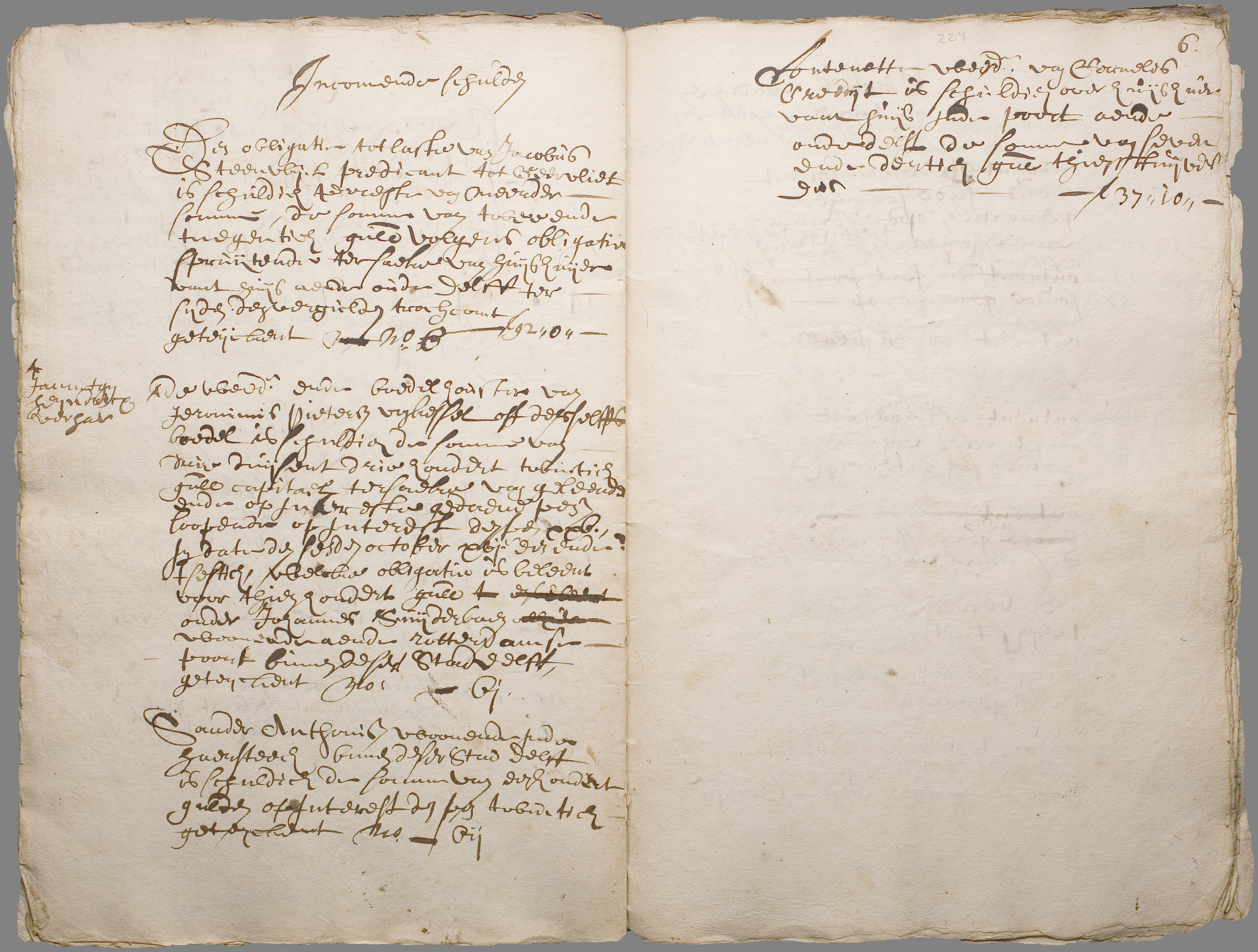
page 6 second item
Jannetge Heijndricx Verhaer de weduwe ende boedelhouster van
Jeronimus Pietersz van Kessel off desselffs
boedel is schuldich de somme van
drie duijsent drie hondert twintich
gulden capitael ter saeke van geleende
ende op interest gedaene ...
loopende op interest ... XXV
in date den sesde october XVIC een ende
t sestich welcke obligatie is beleent
voor thien hondert gulden
onder Johannes Suijderlaen
woonende aen de Rotterdamse
Poort binnen deser stad Delft
geteijckent no: 6
the page
Hi Gerry
Thank you so much for this, including the copy page.
I would never have found Jannetgen- but now I see her name is in the margin, not the main text.
Can I just check a couple of things so I understand exactly what this note is saying.
According to 'Google translate' it says Jeronimus's estate has a debt of 3,320 guilders with interest due 6 Oct 1661?
Then it references another 10,000 guilder loan with a bond due to Johannes Suijderlaen in Delft?
Also why is this recorded in Jannitgen's father in laws 'debtor' accounts? Was he involved in the loan somehow?
Many thanks for all your efforts, very much appreciated.
Anne
Jeronimus borrowed 3320 guilders from his father (interest rate 4%). So this loan is in his father’s inventory. It is difficult to explain in English how it works with the bond. Jeronimus gave a bond of 3320 guilders to his father Pieter. Pieter used this bond as collateral to borrow 1000 (not 10,000) guilders from Johannes Suijderlaen.
That's perfect, thanks Gerry. Your explanation is really helpful.
I've come across bonds being given as collateral for loans before in 17th century Holland.
So Jannetgen had to take over the debt as she was now the estate holder.
very best wishes
Anne
Anne
zei op zaterdag, 31 oktober 2026 - 16:15