Page 2


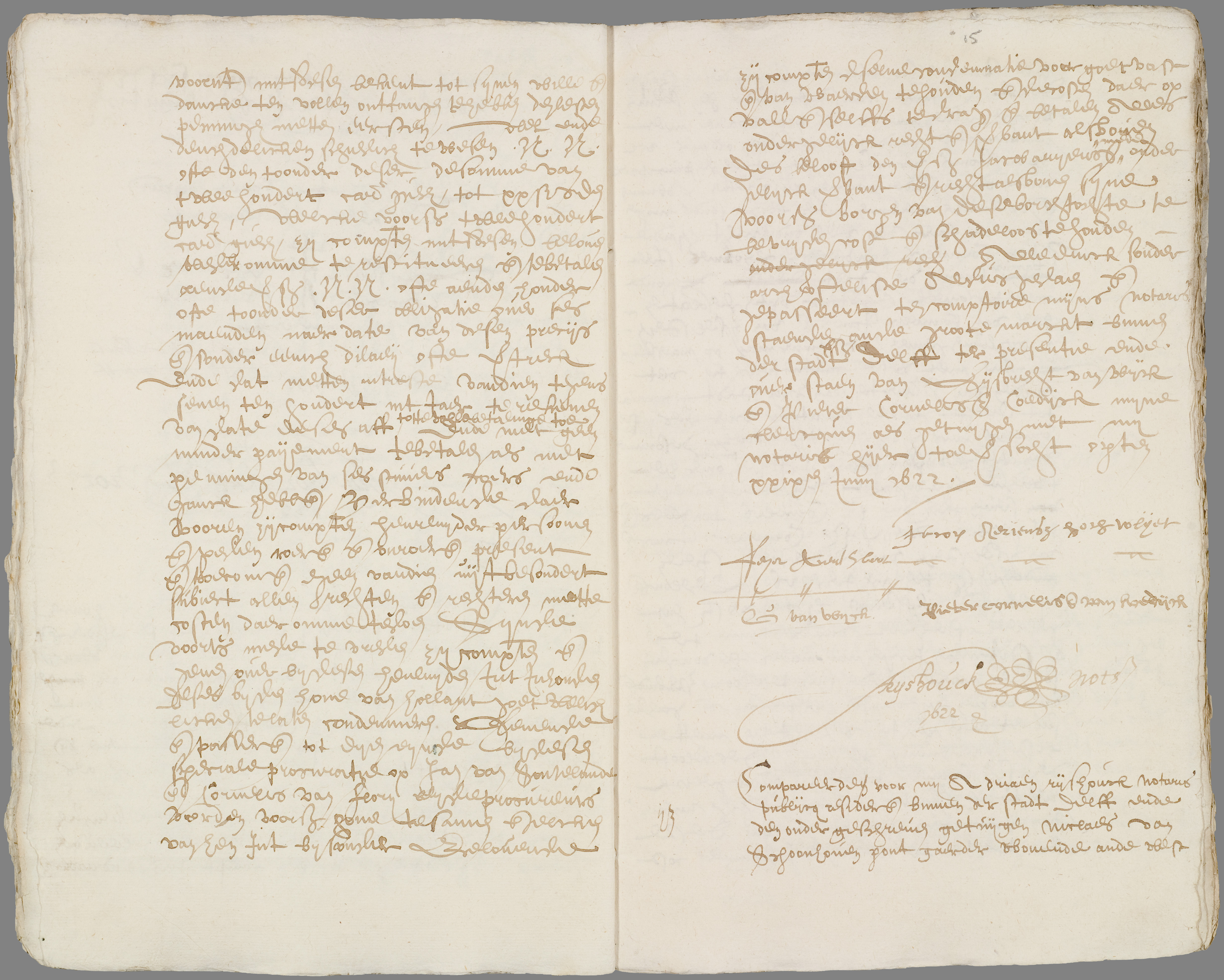
This concerns Niclaes van Schoonhoven- who is recorded in the English translation as a 'pond collector'. Does anyone have any idea what this title meant?
Also included is Cornelis Pouwelsz Bolnes a brick maker. I did wonder if he was connected to Catherine Bolnes, Vermeer's wife but am not sure?
Any help interpreting the text would be much appreciated.
with thanks
Anne
p.s. the document starts at the bottom of the 2nd page-I think. I'll attach the following page with the main text.
Page 2
Compareerde voor mij Adriaen Rijshouck,
notaris publicq, bij den Hove van Hollant ghe-
admitteert, residerende binnen der stadt Delff ende
den ondergeschreven getuygen, Niclaes van
Schoonhoven, pontgaerder, woonende an de west- /
zijde van de Coorenmarckt binnen deser stadt
Delft. ende constitueerde hemselven bij desen
borge ende mede als principale met
renunciatie van den benefitien ordinis vel
excussionis, vermeldende dat men den principael
voor den borgen soude moeten anspreken, verwinnen
ende executeren aleer men opten borge soude mogen
comen, als daervan wel onderrecht zijnde,
voor Cornelis Pouwelsz Bolnes, steen-
backer binnen de stadt Gouda,
mede personeel crediteur opten desolaten
boel van Cornelis Jansz van IJselsteyn,
in zijn leven gemeenlants timmerman op Maessluys,
omme met dese cautie te lichten uut
handen van Maerten van Voorstadt, coopman
tot Delff, mede curateur over des voorsz.
Cornelis Jansz van IJselsteyns boel, de somme
van een ende vijftich gulden vijftyen stuvers over het
twede vyerde paert van de tweehondert
seven gulden die hij Cornelis Pouwelsz
int geheel an de voorsz. Cornelis Jansz
van IJselsteyn van gemelde stede
ten achteren is, belovende
hij comparante deselve 51 gulden 15 stuvers, tsij int
geheel ofte deel, wederomme te
restitueren indyen namaels bevonden
soude mogen werden sulcx te behooren, verbindende
daervooren hij comparant zijn persoon ende goederen
subject allen rechten ende rechteren, mette
costen daeromme te doen, des belooft
de voorsz. Cornelis Pouwelsz, mede comparerende, onder gelijck
recht ende verbant als boven den voorsz. Niclaes
van Schoonhoven zijnen borge van dese
borchtochte te bevrijen, indemneren, cost /
ende schadeloos te houden, alle dinck sonder
arch ofte liste. Aldus gedaen ende gepasseert
ten comptoire mijns notaris, staende
aen de Groote Marckt binnen de voorsz. stadt
Delff, present Pieter Heyndricxz Raes ende
Gijsbert van Wijck, mijne clercquen
als getuygen met mij notaris hiertoe
versocht opten 5en July 1622.
Claes Aryenssen van Schoonhoven, 1622
Cornelis Pouwelsz Bolnes
G. van Wijck
Pieter Heyndrixz Raes
A. Rijshouck, notaris, 1622
Dear Geert
Danke je wel for the transcription. I've looked up the word 'pontgaerder' which translates as 'ferryman'. So at least that's one mystery is solved.
Thanks again.
Anne
Pontgaarder, hij die het veergeld int.
the man who receives the ferry money.
Many thanks Geert.
Very interesting. I'm assuming the ferry business was very profitable as in 1622 Nicholaes promised his brother Jacob in a pre-marriage contract, half the profit of his business which he estimated to be 1,000 guilder per year. If it was less than this he would make up the difference. If it was more than this the newly wedded couple could keep the profits.
Of course Nicholaes could have had another business. I've seen him described as a 'merchant'.
very best wishes
Anne
Dear Anne,
Kudos to Geert for the swift transcription. The term pontgaarder does however not refers to the job of ferryman. A pondgaarder was a broker of agricultural products, mores specifically of grain; the term was specifically used in the southwestern part of The Netherlands. A pondgaarder was responsible for selling the grain on behalf of the farmers on the grain market in the cities (Delft, Gouda, Rotterdam). He was regarded as a reliable party, as a pondgaarder had to pledge an oath to the local government to act in the best interest of the merchants; he also was in charge of administering all grain transactions and inspection and storing samples of the grain loads that were sold. They were paid a percentage per weight, which also explains the name (transl. : gatherer of pounds).
The confusion with the ferryman is easy to make, as pont with a t is indeed a ferry, but t and d were exchangeable in a lot of words at that time.
As pondgaarders also used to act as intermediaries, they used to have a solid financial basis and as a result often acted as guarantors for transactions, as is also the case here.
Dear Rene
Well that's really fascinating, thank you so much for your explanation of my confused 'pond collector'!
The translation was close-but not close enough. That explains how Nicholaes was able to give the newlyweds such a nice wedding gift and provides another glimpse into Delft society in the 17th century.
As you can probably tell I'm back researching the 'Schoonhoven sisters' who came from an interesting family, and whom I believe were Catholic on their mother's side.
very best wishes
Anne
Anne
zei op woensdag 30 juli 2025 - 10:29