p.2
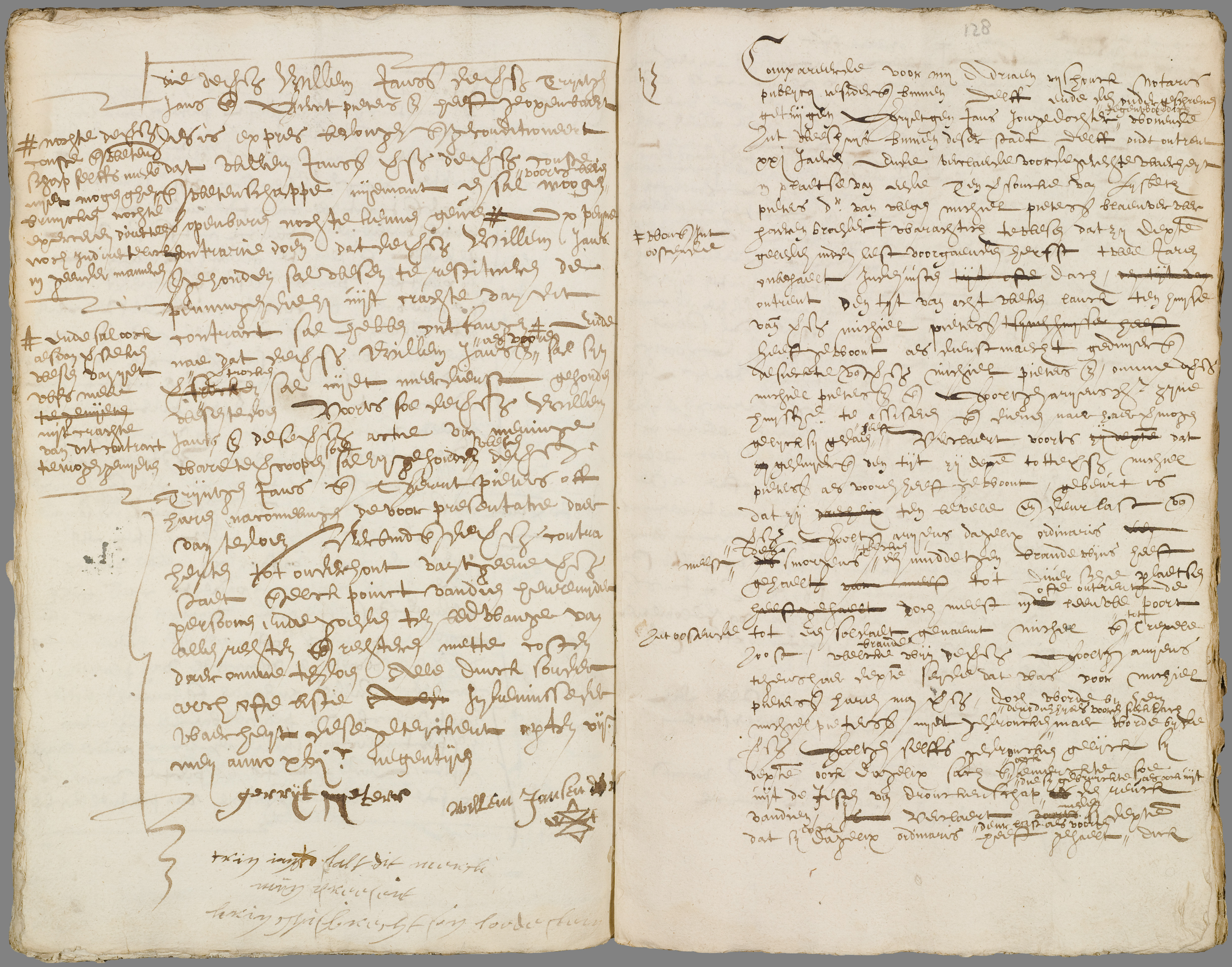

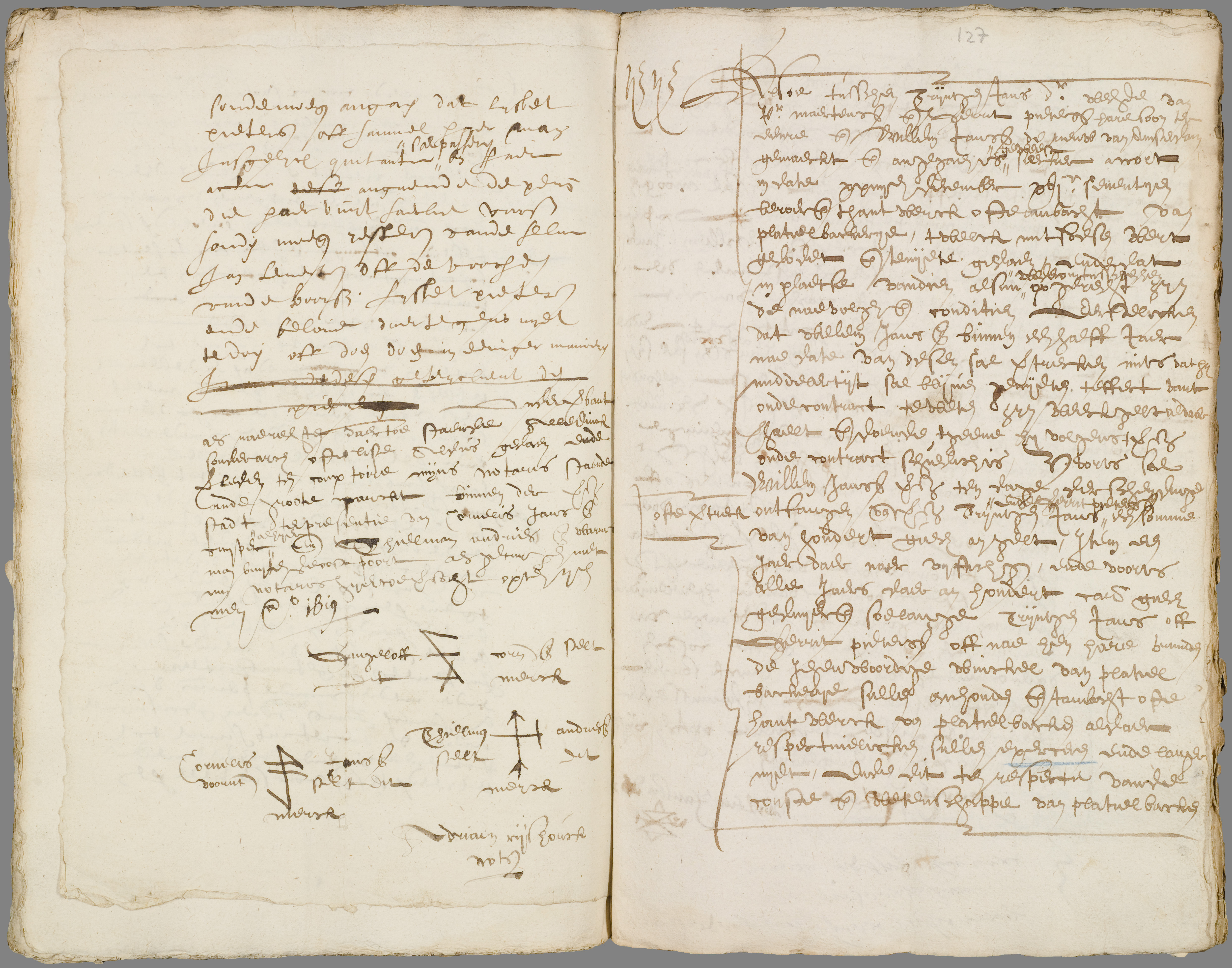
This concerns Gerrit Pietersz and Willem Jansz du Reui, possibly an employment contract in Delft?
This deed links to my previous posting concerning both men.
Further information would be much appreciated.
With many thanks
Anne
p.s. Does Willem Jansz sign without his surname, plus a 'mark'?
p.2
Anne,
Here is the content of this record:
Trijntgen Jansdr, widow of Pieter Maertensz, and Gerrit Pietersz, her son, on the one side, and Willem Jansz de Rieuw from Amsterdam, had entered into an agreement on 24 Dec 1617 regarding the handwork or trade of platielbackerye (= pottery baking). This agreement is terminated today and replaced with a new agreement between the same parties. Firstly, Willem Jansz will leave within half a year from today and will continue to receive his work money under the old contract during this time while he will continue what he is obligated to do per the same contract. When Willem leaves, Trijntgen Jansdr and Gerrit Pietersz will pay him 100 guilders, another 50 guilders one year later, and then 100 guilders every year after this for as long as Trijntgen Jansdr or Gerrit Pietersz or after them their relatives continue to operate the current winckel van platielbackerye (= pottery baking shop) or exercise the trade or handwork of pottery baking there. These payments are with respect to the conste ende wetenschappe (= art and expertise) of pottery baking to which Willem Jansz has introduced Trijntgen Jansdr and Gerrit Pietersz under the condition that Willem Jansz will not share this art and expertise with anybody else nor will he be allowed to apply these on his own in any way. If Willem Jansz violates this condition, he will have to pay back all the money received under the contract and not receive any further payments. After Willem Jansz leaves he will no longer have to provide any services; if he ever intends to sell this actie (= action) he will first have to tell Trijntge Jansdr, Gerrit Pietersz or their descendants. Each party personally guarantees the agreement to the other party. Signed 7 May 1619 by Gerrijt Pyeters, Trin Jans (her mark), and Willem Jansen de R[ue].
Willem did sign with his last name, but all we can see, albeit stained, is "de R". The remainder of the name disappears into the bind of the book. He also added a so called handmerk (= "hand mark") with his initials, W and I (= J) on either side. My assumption is he used the same mark to "sign" his pottery.
I am not completely sure what is meant by the option to sell this actie; after all, what was there to sell? The thing of value at stake was his expertise and maybe some kind of unique approach/technique. I wonder if this was almost treated like a patent of sorts. Note that the contract does not say anything about what would happen if/when Willem died. I wouldn't think Trijntje and Gerrit could then continue the pottery business for free. So, maybe the selling of the actie means he could sell the "patent" to somebody else or pass it on to his children so that they could continue to receive the contractual fees. Again, not entirely sure.
Best,
Marcel
Anne
zei op vrijdag 8 mei 2026 - 20:55